


Lately, I’ve found myself opening social media and asking a question I never expected to ask about people I know and respect, and I fear they do of me:
Has everyone become radicalised?
By “radicalised” I do not mean violent extremism. I mean something subtler: the growing tendency for people to interpret the entire world through a single ideological lens — a kind of totalising narrative that claims to explain and order everything.
People who once spoke carefully about difficult topics now seem to air their views publicly about politics, identity, and cultural issues with an intensity that would have surprised them a few years ago. Others have adopted positions that feel not just strongly held, but defended with an ideological certainty — what psychologists sometimes call moralised belief systems — that leave little room for any nuance or curiosity.
It is not simply that opinions have changed. It’s as if we’ve gone from thinking aloud for ourselves to shouting for our teams — what social psychologists describe as tribal cognition, where loyalty to a group begins to shape how we interpret reality itself. We have traded the quiet complexity of thought for the loud simplicity of an identity, rushing past nuance until only ideology remains.
Ideas are no longer just debated. They are proclaimed with ideological fervour that sometimes carries the emotional intensity of religious commitment. Positions are no longer tentative or exploratory. They are often defended with a certainty that can feel unnervingly absolute.
What’s most unsettling is that this same pattern appears across very different movements. Progressive activism - climate, trans, immigration, Christian nationalist movements, culture-war Christianity, as everyone seems now to interpret the entire world through a single ideological lens.
Disagreement has been replaced with competing moral certainties.
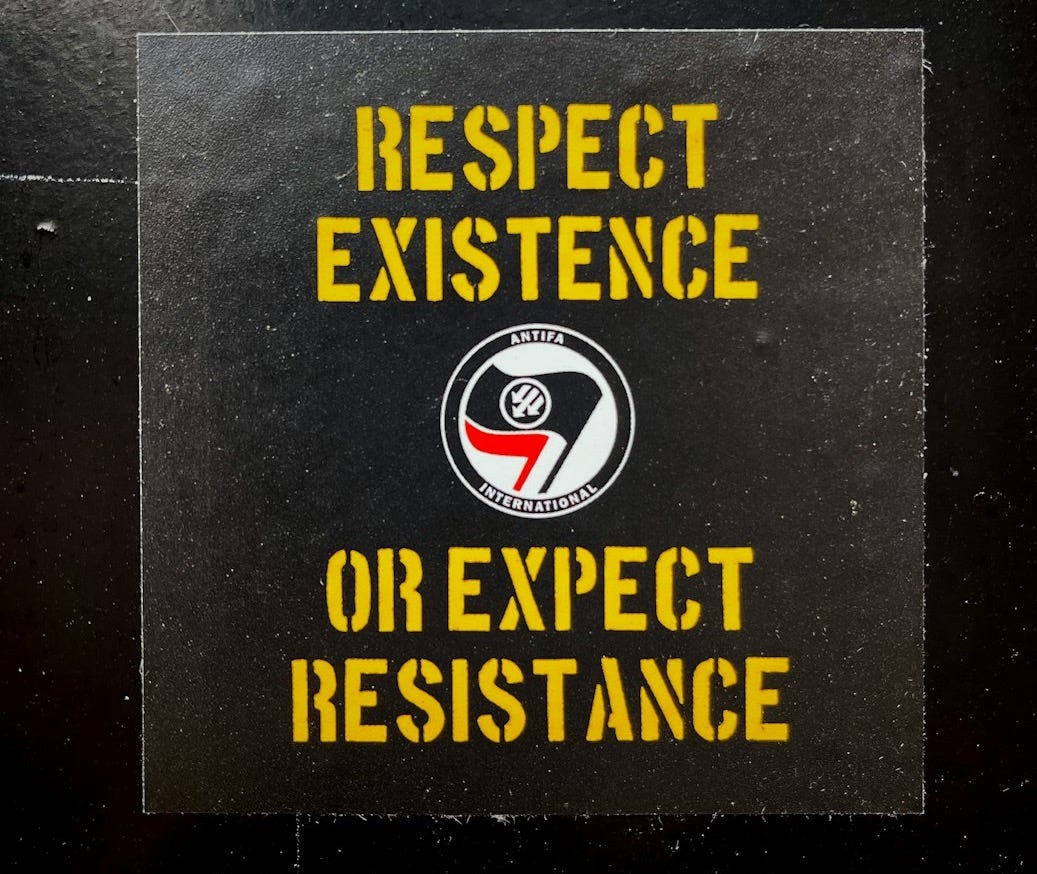
And this has begun to change the way many of us approach ordinary conversations.
Before raising certain topics — politics, identity, culture — there can be a quiet moment of hesitation. A subtle form of a social “handshake”, where we quietly test whether the other person shares enough assumptions about reality for conversation to remain possible.
Should I continue, or will I suddenly step on a pre-programmed ideological landmine, triggering a reaction? In a strange way, what was once ordinary conversation can start to feel like connecting two incompatible devices across an unstable network.
For most of us, this shift is deeply disorienting, disconcerting and often distressing. At times, it can feel as if the world, including most of our friends, is quietly radicalising around us
All this begs a question: if this is the case, what is causing this?
The familiar explanations come quickly. We are told that social media algorithms are driving polarisation. Others blame misinformation, the collapse of critical thinking, or the fragmentation of media ecosystems.
These explanations contain genuine insight. But they may not reach the deepest layer of what we are experiencing. The deeper crisis may be something far more unsettling:
Our identity crisis is really a crisis about reality.
At the centre of the polycrisis of our times is one of identity. Questions of identity now sit at the centre of public life. Who we are, how we define ourselves, what it means to be human — these questions shape debates about gender, race, nationhood, belonging, and justice.
But an identity crisis is the symptom that signals something deeper that is the cause.
The Deeper Crisis of Reality

Human beings do not live by information and facts. We live from a deeper sense of what the world is — what it means to be human, where truth comes from, what life is for, and what gives meaning to suffering—and to the hope beyond it.
Philosophers call this ontology: our understanding of what reality actually is. In simpler terms, it is the story we believe about what the world fundamentally is and how we exist within it.
For centuries in the West, even people who disagreed about many things still shared certain basic assumptions about the world. There was a broadly Christian vision of reality: a created world, human beings made in the image of God, moral responsibility, the possibility of forgiveness, and a story that gave meaning to suffering and hope beyond it.
Those assumptions formed what sociologists sometimes call plausibility structures — the invisible frameworks that make certain beliefs feel obvious and others implausible. But when those structures weaken and are removed, something remarkable happens.
People do not simply change their opinions. They begin to inhabit different realities.
And when people no longer share the same vision of reality, even the best friendships become turbulent.
The arguments we see on the surface — about politics, culture, identity, and morality — often reflect deeper disagreements about what the world actually is. This helps explain why many modern public movements increasingly resemble religions as ideological ways of being.
They offer moral certainty.
They divide the world into heroes and villains.
They promise redemption through struggle.
And they provide something many people crave: identity and belonging.
In a world where the deeper story of reality has become unstable, these ideological movements offer something many people are searching for: somewhere solid to stand and make sense of the world.
Yet there is another layer to this story that Christians need to face honestly.
Some of the forces shaping this moment did not originate outside the Church. In many cases, they emerged within it.
For several decades, much of Western evangelical Christianity was shaped - and still is - by an intensely consumerist form of faith. Christianity was often presented as a pathway to personal fulfilment, emotional satisfaction, spiritual breakthrough, and purpose-driven success. The language of faith became intertwined with the language of self-realisation and material fulfilment.
In theological terms, this is an over-realised eschatology — the expectation that the promises of the Kingdom should be fully experienced in the present and in certain material and identity-realising ways.
Faith promised success.
Faith promised a breakthrough.
Faith promised fulfilment.
Faith promised therapeutic well-being.
But life has a way of confronting such expectations with the reality of suffering, disappointment, and ambiguity. And when the faith people were given cannot metabolise suffering, cannot make sense of disappointment, failure, and the ambiguity of life, something about consumeristic faith breaks. Some gave up on faith completely, and others migrated to ideologies adjacent to faith.
Many believers do not abandon their passion for meaning or justice. Instead, that passion became redirected into causes that promise a clearer moral narrative and a stronger sense of identity. Over-realised eschatology gets migrated into ideological causes.
Political movements.
Identity politics.
Gender issues.
Climate change.
These causes can begin to function as substitute eschatologies — narratives that promise redemption through struggle and transformation through political or cultural victory. The language around them may still sound Christian.
But their centre has fundamentally shifted.
Christ becomes a symbol supporting the cause rather than the reality in whom all things hold together. When this happens, Christianity itself can quietly become another ideology among many.
But the Christian faith begins somewhere very different. It begins with a claim about reality. In the New Testament, the apostle Paul makes a breathtaking statement about Christ: “In him all things hold together.”(Colossians 1:17)
This is not simply a nice devotional idea; it is a major ontological claim. It means that reality itself is not ultimately grounded in power, ideology, identity, or tribe.
Reality is grounded ultimately in Christ.
If that claim is true, then the search for identity that animates so much of our cultural conflicts begins to look very different. Identity is no longer something we must endlessly construct through self-definition or ideological allegiance. It becomes something we receive through participation in the life, death, and resurrection of Christ — what the early Church often described as sharing in the life of God.
In the Ignatian tradition, moments of confusion are not simply problems to be solved. They are invitations to deeper discernment. Ignatius encouraged his companions to ask a searching question whenever passions were running high:
What spirit is shaping the way we see the world?
Perhaps the destabilisation many people feel today is not only a crisis. Perhaps it is also an invitation. An invitation to ask a deeper question beneath the arguments of our age:
What vision/spirit of reality is shaping the way we see the world?

Because if our identity crisis is rooted in a deeper crisis about reality itself, then the most important question we can ask is not which side we are on. It is this: what is the reality we believe we are living in?
And if the identity crisis of our age is rooted in a deeper crisis about reality itself, then ontology may be the hidden fault line beneath many of our most intense cultural conflicts.
In Part 2 — Why We No Longer Live in the Same World — we’ll explore how and why the loss of shared ontology has made many of our conversations almost impossible.
Thank you Jason, this is so helpful to have articulated. I have a couple of dear friends of longstanding, and as you describe, we seem to be drifting apart in basic assumptions. I look forward to the next essays.