



This is the third part of a series on why evangelicals are turning to Ignatian prayer. Part one, "Why Evangelicals Are Praying Like Jesuits", is here.
There is perhaps no tradition of Christianity that talks more about the heart than evangelicalism. We invite Jesus into our hearts, worship with all our hearts, and long to recover our first love. Yet I wonder how well many of us have learned to live with God from our hearts.
In Scripture, the heart is something much larger than our emotional life. It is the centre of our personhood, where our thinking, feeling, desiring, and choosing come together. It is why the writer of Proverbs tells us to guard our hearts, because everything we do flows from them (Proverbs 4:23).
Somewhere along the way, many of us inherited a much smaller understanding of the heart. Evangelicals have a theology of the heart but often lack a spirituality that adequately engages, forms and frees the heart. Ignatius offers us one.
Whatever happened to our hearts?

Some readers will remember the little train illustration in Bill Bright’s Four Spiritual Laws. Fact was the engine, faith followed, and feelings were the carriage at the back. The train could run perfectly well without it. I still remember being warned as a new Christian of the dangers of letting my feelings be the engine of my faith.
That illustration sought to safeguard something important: the reality of our salvation does not depend on how we feel. But I wonder what else we learned from it, as an unintended consequence. For many of us, feelings became something incidental to our life with God, if not something to be actively suspicious of. Despite the songs and emotions generated in public worship.
For many, corporate worship became the one place where our hearts came alive. But how do we sustain that experience when the music stops and we go home? How do we live from that same place of love on an unremarkable Tuesday afternoon?
And whilst we have struggled to engage our hearts in our life with God, the world around us has been remarkably successful at engaging them. Other loves have ruthlessly and continually captured and shaped our hearts and imaginations.
Jesus’ words to the church in Ephesus are particularly poignant. Here was a church that had worked hard, persevered and discerned false teaching. Yet it had forsaken its first love (Revelation 2:4).
I find that an uncomfortably familiar portrait.
A different way of praying
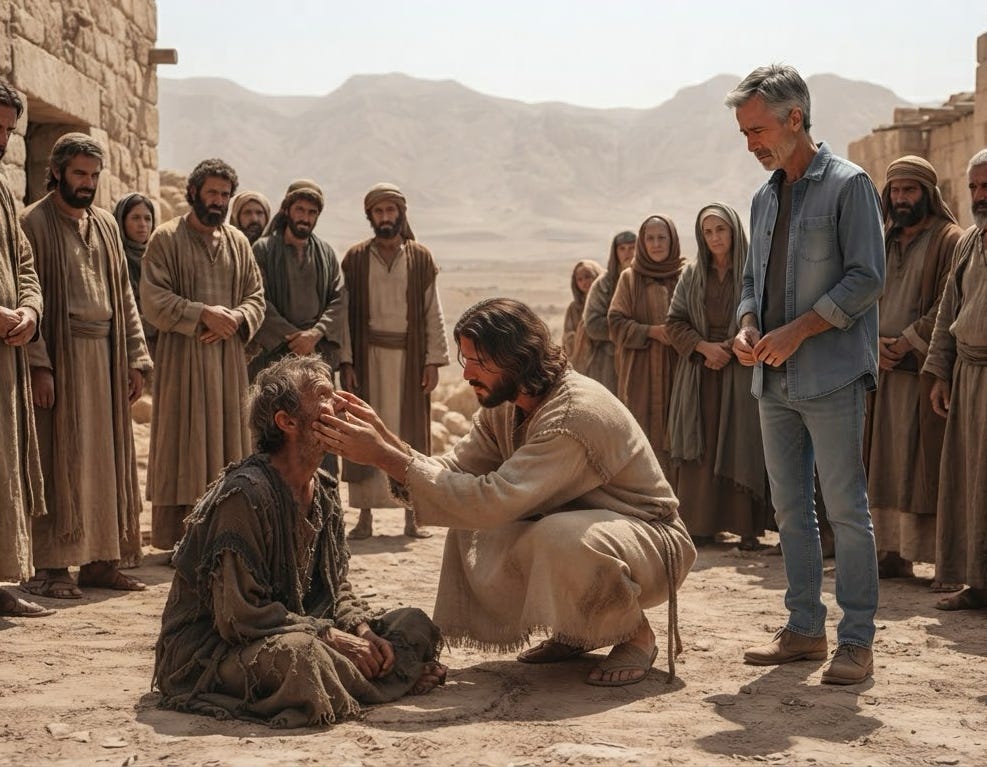
What I find so compelling about Ignatian prayer is that it engages our hearts in much the same way that the rest of life does.
Think about how we fall in love, how we delight in our children, how a film moves us to tears, or how the memory of a particular place can fill us with longing. We experience these things through our senses, our imaginations, our memories and our participation in stories. Ignatius invites us to bring all these capacities into our encounter with Jesus. To bring our own stories into conversation and eschatological contact with Christ’s story.
Rather than only reading about Jesus healing someone, Ignatius invites us to place ourselves imaginatively in the scene as if we were there. To notice the people around him, hear Christ’s voice, watch his face and attend to what happens within us. But this is much more than an exercise in imagination. We offer our imagination to the Holy Spirit as a way for him to draw us into the Gospel story. We are not simply trying to recreate an event from two thousand years ago, but are making ourselves available to an encounter with the living Jesus through that story.
This makes so much sense to me because our imaginations are how the rest of life captures our hearts. It is how a novel draws us into another world, how a film moves us to tears, how we fall in love, how we remember our children’s early years, and how we dream about our futures. It is also how advertising generates desire, and our consumer culture persuades us to love the things it wants us to love. Our imaginations are intimately connected to what we come to desire, cherish and give ourselves to.
Ignatius invites us to bring this same capacity into our life with God. Why would we leave out of our prayer one of the very means by which our hearts are most deeply engaged in the rest of life? Through the ministry of the Holy Spirit, the Gospel becomes not simply something we read, understand and believe, but a story we inhabit, in which our hearts can be captured by the person of Jesus.
And something happens through this kind of praying. Jesus becomes someone we know more and more through the experience of being with him. Why is love, in particular, at the heart of this encounter? Because Ignatius discovered something that Christians had before him: that love is not simply one of the many things we might experience in prayer. It is what we might expect to find at the heart of an encounter with God.
This is why Ignatius understands spiritual consolation, in its deepest sense, as our hearts becoming inflamed with love for God. And it is why the Spiritual Exercises culminate in the Contemplation to Attain Love. The whole journey has been towards a deeper participation in the love of God.
The love of God that we have believed in, preached about and sung about becomes something we receive in the depths of who we are. And we discover that we can love Jesus more than we ever imagined possible, because we are discovering something of the immeasurable extent to which we are loved by him.
But can we trust our feelings?
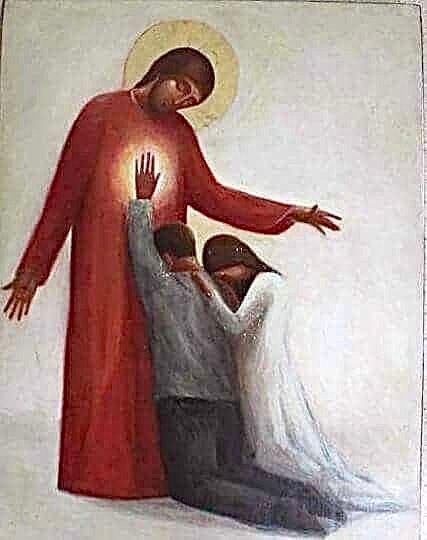
This is where Ignatius offers something particularly helpful to evangelicals and our hearts.
C. S. Lewis, in The Abolition of Man, suggests that our feelings can be appropriate responses to what is real. A beautiful waterfall is worthy of our wonder. Something cruel is worthy of our indignation. Our feelings can be educated, and our loves rightly ordered. Richard Beck describes this as orthopathy – right feeling – alongside orthodoxy, right belief, and orthopraxy, right practice. Ignatius offers a way to attend to and discern these most interior movements, which concern the fundamental nature of reality and our existence.
He calls movements that draw us towards God consolation, and those that draw us away from God desolation. Neither simply describes whether we feel good or bad. Some painful experiences draw us more deeply into the love of God, while pleasurable ones take us away from him.
The question becomes not simply, How do I feel? But what is happening in my heart, and where is it taking me?
Our hearts need neither to be obeyed unquestioningly nor distrusted instinctively. They need to be formed and educated in love.
A heart that is loved

Ignatius brings the Spiritual Exercises to their culmination in the Contemplation to Attain Love. He invites us to discover how God has been loving us in all the particulars of our lives, and to respond by offering ourselves in love.
It is the movement John describes so simply: ‘We love because he first loved us’ (1 John 4:19).
The Scottish evangelical preacher Thomas Chalmers understood something of this when he wrote The Expulsive Power of a New Affection. Our hearts are freed from lesser loves by discovering a greater love.
Perhaps what many of us need is not another exhortation to love Jesus more, but a way of praying that helps us discover how much more we are loved. And as our hearts become more alive to his love, that love finds its way into our marriages, our families, our friendships, our work and our participation in the world.
Ignatius reminds us that love is expressed more in deeds than in words. What we love shapes what we do. But the reverse is also true. What we do shapes what we love. And that is where we will go next in this series.